
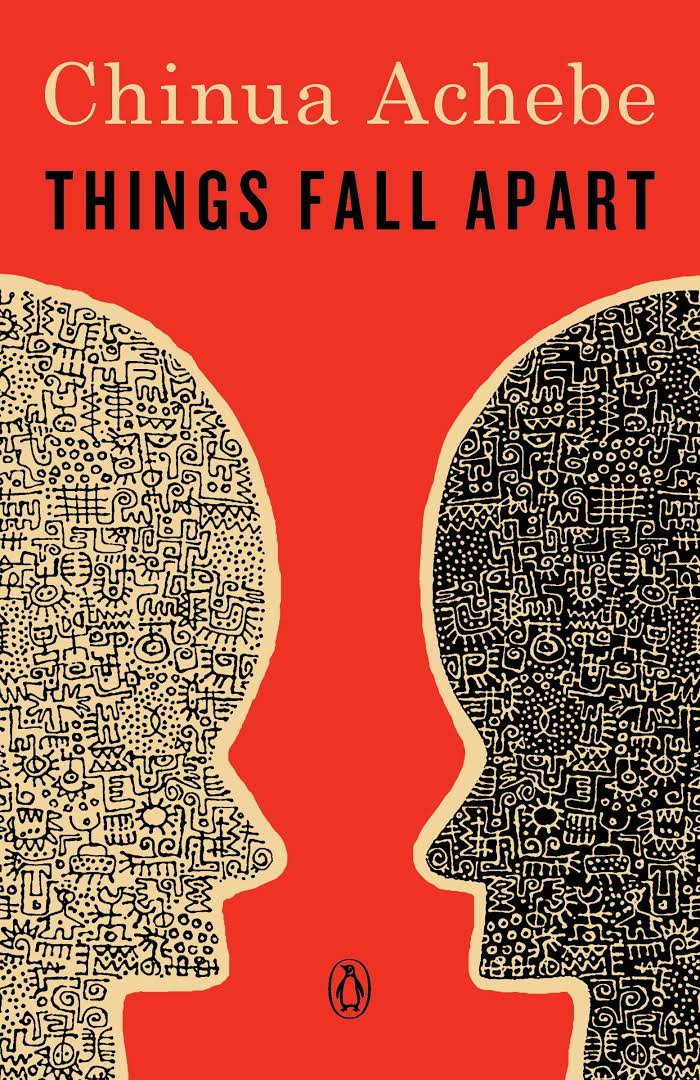
Things Fall Apart Paperback – September 1, 1994
“A true classic of world literature . . . A masterpiece that has inspired generations of writers in Nigeria, across Africa, and around the world.” —Barack Obama
“African literature is incomplete and unthinkable without the works of Chinua Achebe.” —Toni Morrison
Nominated as one of America’s best-loved novels by PBS’s The Great American Read
$7.58
CompareThings Fall Apart is the first of three novels in Chinua Achebe’s critically acclaimed African Trilogy. It is a classic narrative about Africa’s cataclysmic encounter with Europe as it establishes a colonial presence on the continent. Told through the fictional experiences of Okonkwo, a wealthy and fearless Igbo warrior of Umuofia in the late 1800s, Things Fall Apart explores one man’s futile resistance to the devaluing of his Igbo traditions by British political andreligious forces and his despair as his community capitulates to the powerful new order.
Based on 0 reviews
Be the first to review “Things Fall Apart Paperback – September 1, 1994”
Related products
-
African Books, Products
Ancient Egypt: The Definitive Visual History (DK Classic History)
Take a journey through Ancient Egypt and see how the pharaohs once lived!
An enticing and insightful guide that covers 3,000 years of life under the pharaohs (c. 3200-30 BCE) from the early kings of Egypt to the reign of Cleopatra and the Roman conquest, this book explains it all!
Written by a team of respected Egyptologists, this book includes the following exciting things:
• Themed spreads explore developments in areas like religion, writing, painting, ceramics and medicine.
• Biography spreads feature the lives of the most influential pharaohs and queens.
• Detailed maps set the main sites in context, and show the growth of the civilization and its trade network.
• An optional 80-page reference section provides a directory of the pharaohs and gods and goddesses.Unlock every aspect of Ancient Egypt, from pharaohs and pyramids to ordinary people’s everyday lives and beliefs. With 31 Egyptian dynasties and 3,000 years of history, from the time of Narmer to that of Cleopatra and so much more, this is the perfect comprehensive guide to Egypt’s ancient civilization.
There’s so much to learn and experience with this up-to-date biography on Ancient Egypt. With more than 850 photos, illustrations and maps, this is the perfect book for thinkers, borrowers, life-long learners or anyone with an interest in ancient civilizations and Egyptology.
SKU: 0744029244 -
African Books, Products
Arrow of God
“My favorite novel.” —Chimamanda Ngozi Adichie
“A magical writer—one of the greatest of the twentieth century.” —Margaret Atwood
“African literature is incomplete and unthinkable without the works of Chinua Achebe.” —Toni MorrisonThe second novel in Chinua Achebe’s masterful African trilogy, following Things Fall Apart and preceding No Longer at Ease
When Things Fall Apart ends, colonial rule has been introduced to Umuofia, and the character of the nation, its values, freedoms, religious and socio-political foundations have substantially and irrevocably been altered. Arrow of God, the second novel in Chinua Achebe’s The African Trilogy, moves the historical narrative forward. This time, the action revolves around Ezeulu, the headstrong chief priest of the god Ulu, which is worshipped by the six villages of Umuaro. The novel is a meditation on the nature, uses, and responsibility of power and leadership. Ezeulu finds that his authority is increasingly under threat from rivals within his nation and functionaries of the newly established British colonial government. Yet he sees himself as untouchable. He is forced, with tragic consequences, to reconcile conflicting impulses in his own nature—a need to serve the protecting deity of his Umuaro people; a desire to retain control over their religious observances; and a need to gain increased personal power by pushing his authority to the limits. He ultimately fails as he leads his people to their own destruction, and consequently, his personal tragedy arises. Arrow of God is an unforgettable portrayal of the loss of faith, and the downfall of a man in a society forever altered by colonialism.SKU: 0385014805 -
African Books, Products
Purple Hibiscus: A Novel
“One of the most vital and original novelists of her generation.” —Larissa MacFarquhar, The New Yorker
From the bestselling author of Americanah and We Should All Be Feminists
Fifteen-year-old Kambili and her older brother Jaja lead a privileged life in Enugu, Nigeria. They live in a beautiful house, with a caring family, and attend an exclusive missionary school. They’re completely shielded from the troubles of the world. Yet, as Kambili reveals in her tender-voiced account, things are less perfect than they appear. Although her Papa is generous and well respected, he is fanatically religious and tyrannical at home—a home that is silent and suffocating.
As the country begins to fall apart under a military coup, Kambili and Jaja are sent to their aunt, a university professor outside the city, where they discover a life beyond the confines of their father’s authority. Books cram the shelves, curry and nutmeg permeate the air, and their cousins’ laughter rings throughout the house. When they return home, tensions within the family escalate, and Kambili must find the strength to keep her loved ones together.
Purple Hibiscus is an exquisite novel about the emotional turmoil of adolescence, the powerful bonds of family, and the bright promise of freedom.
SKU: 1616202416 -
African Books, Products
A Doll's House
A Doll’s House (Norwegian: Et dukkehjem; also translated as A Doll House) is a three-act play in prose by Henrik Ibsen. It premiered at the Royal Theatre in Copenhagen, Denmark, on 21 December 1879, having been published earlier that month. The play is significant for its critical attitude toward 19th century marriage norms. It aroused great controversy at the time, as it concludes with the protagonist, Nora, leaving her husband and children because she wants to discover herself. Ibsen was inspired by the belief that “a woman cannot be herself in modern society,” since it is “an exclusively male society, with laws made by men and with prosecutors and judges who assess feminine conduct from a masculine standpoint.” Its ideas can also be seen as having a wider application: Michael Meyer argued that the play’s theme is not women’s rights, but rather “the need of every individual to find out the kind of person he or she really is and to strive to become that person.” In a speech given to the Norwegian Association for Women’s Rights in 1898, Ibsen insisted that he “must disclaim the honor of having consciously worked for the women’s rights movement,” since he wrote “without any conscious thought of making propaganda,” his task having been “the description of humanity.”
SKU: 1503213803


There are no reviews yet.